
MSC.581(110)
Revised Recommendations
for Entering Enclosed
Spaces Aboard Ships
Ask an expert for adviceProtect Your Crew. Strengthen Compliance. Partner with Dräger.
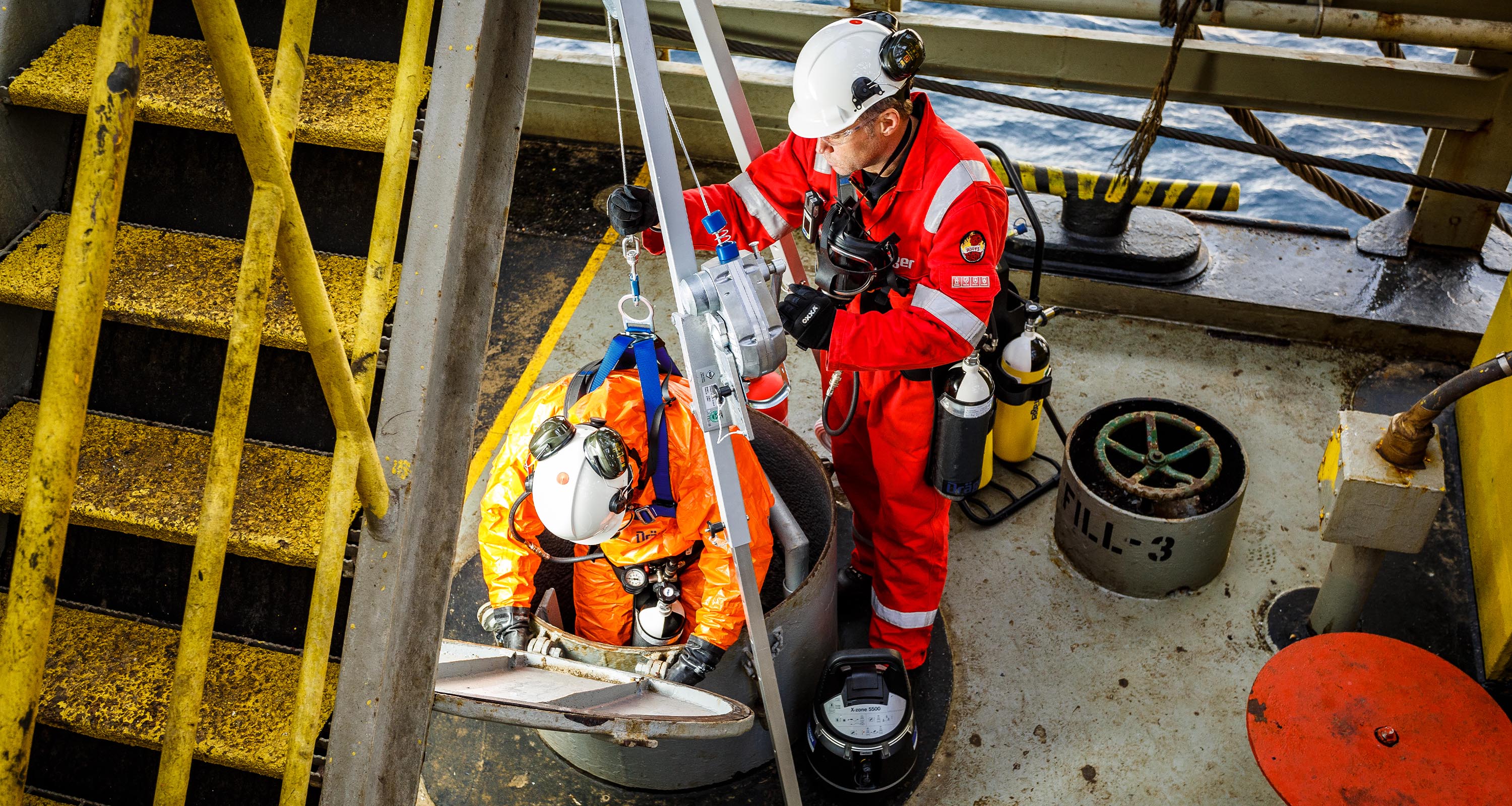
The IMO has introduced MSC.581(110) to significantly improve safety during entry into enclosed spaces on ships. These updated recommendations address the ongoing risks of oxygen‑deficient, toxic, and flammable atmospheres that continue to cause serious accidents at sea.
With MSC.581(110), atmospheric testing becomes more rigorous and more precise than ever before. Oxygen levels must be at least 20.9%, and carbon dioxide must remain below 0.5% (5,000 ppm) before entry.
Crews must also verify that toxic and flammable gases are within strictly defined safe limits to ensure a hazard‑free environment.
The regulation requires every person entering an enclosed space to carry a calibrated personal gas detector, ensuring continuous monitoring throughout the entire operation.
These measures are designed to reduce fatalities, improve risk awareness, and support safer decision‑making across all vessel types.
The new requirements are clear:
- Oxygen must be at least 20.9%.
- CO₂ must stay below 0.5% (5,000 ppm).
- Flammable and toxic gases must remain within strict safe limits.
- Every crew member entering confined spaces must carry a calibrated personal gas detector
Dräger Gas Detection: Built for MSC.581(110) Compliance
Dräger’s portable gas detectors—such as the Dräger X‑am series—are engineered to meet the full scope of the new MSC 581(110) requirements.
Our technology continuously measures O₂, CO₂, flammable gases, and toxic gases, ensuring crews always have the reliable data the regulation demands.
- Accurate multi‑gas detection that aligns with all mandated atmospheric parameters.
- High‑performance sensors designed for demanding marine environments.
- Reliable, easy‑to‑calibrate detectors that support compliance and operational readiness.
- Continuous personal monitoring, exactly as required under MSC.581(110).
Dräger X-am 5600
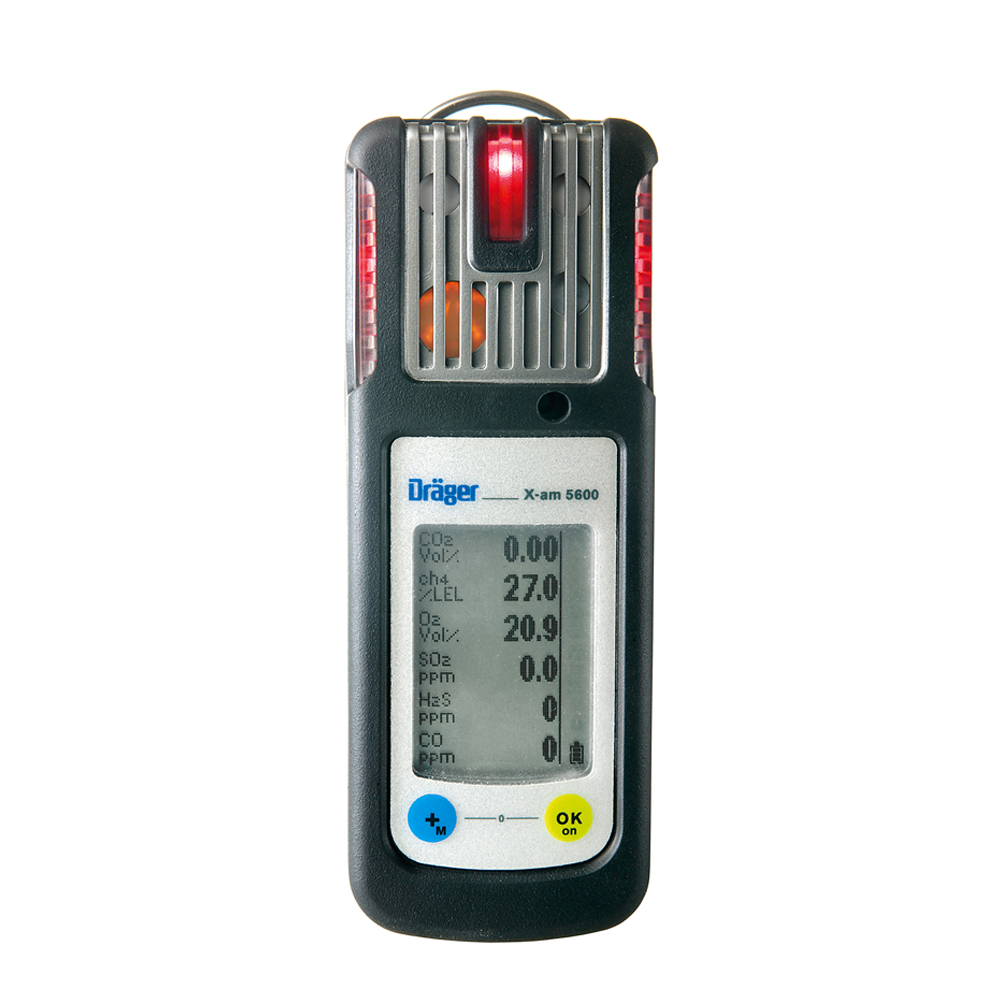
Featuring an ergonomic design and innovative infrared sensor technology, the Dräger X-am® 5600 is the smallest gas detection instrument for the measurement of up to 6 gases. And meets the MSC.581(110). Ideal for personal monitoring applications, this robust and water-tight detector provides accurate, reliable measurements of explosive, combustible and toxic gases and vapors as well as oxygen.
Read moreDräger X-am 8000
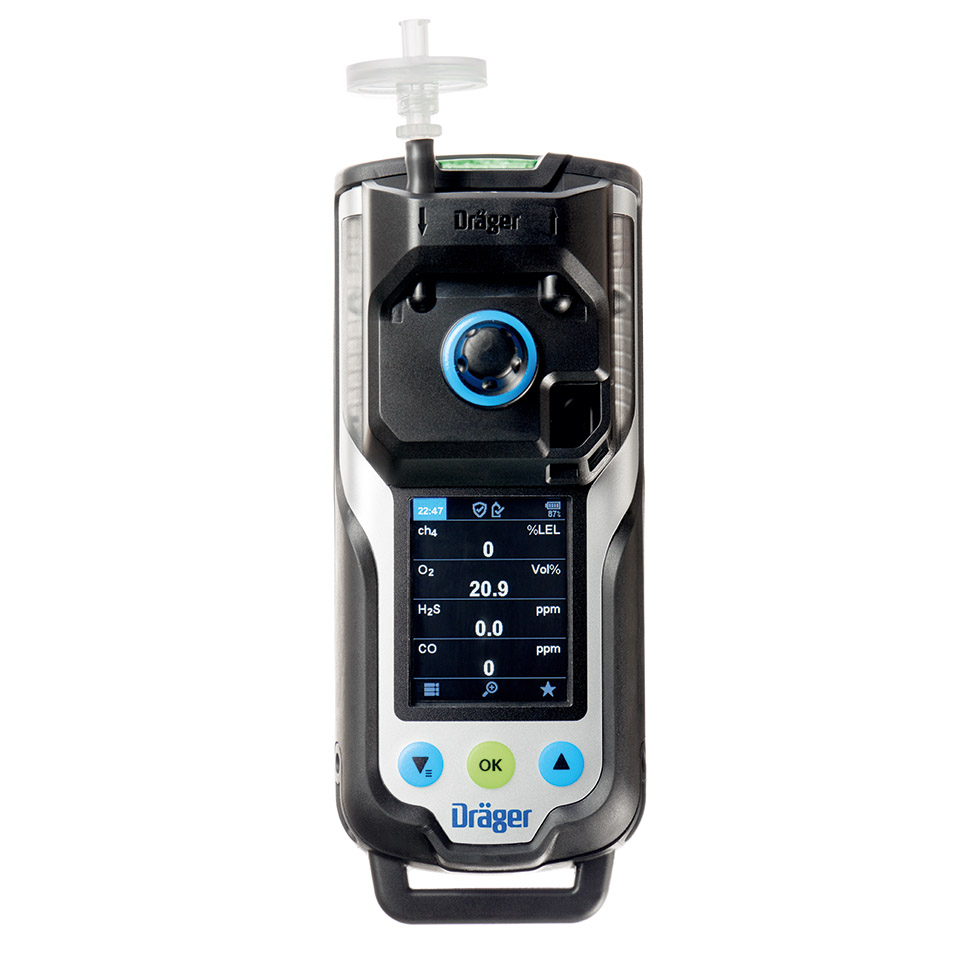
Clearance measurement was never this easy and convenient: the Dräger X-am® 8000 measures up to seven toxic as well as flammable gases, vapours and oxygen all at once — either in pump or diffusion mode. The X-am 8000 complies with MSC.581(110). Innovative signaling design and handy assistant functions ensure complete safety throughout the process.
Read moreDräger X-dock
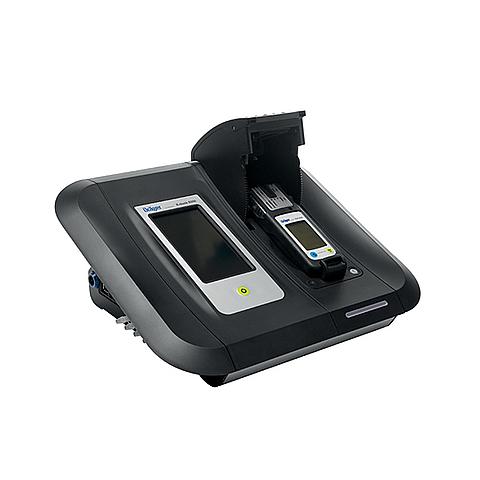
The Dräger X-dock series provides you with full control of your portable Dräger gas detection instruments. Automatic bump tests and calibrations with reduced test gas consumption and short testing times save time and money. Comprehensive documentation and evaluations provide you with a clear overview.
Read moreWhich vessels need to upgrade for MSC.581(110)?
This infographic series shows recommended 5-gas detectors - including CO₂ measurement - for tankers, bulk carriers, general cargo ships, offshore support vessels, and oil rigs & jackups. These examples highlight compliance and safety for cargo hold gas detection and confined space entry.
Download Infographic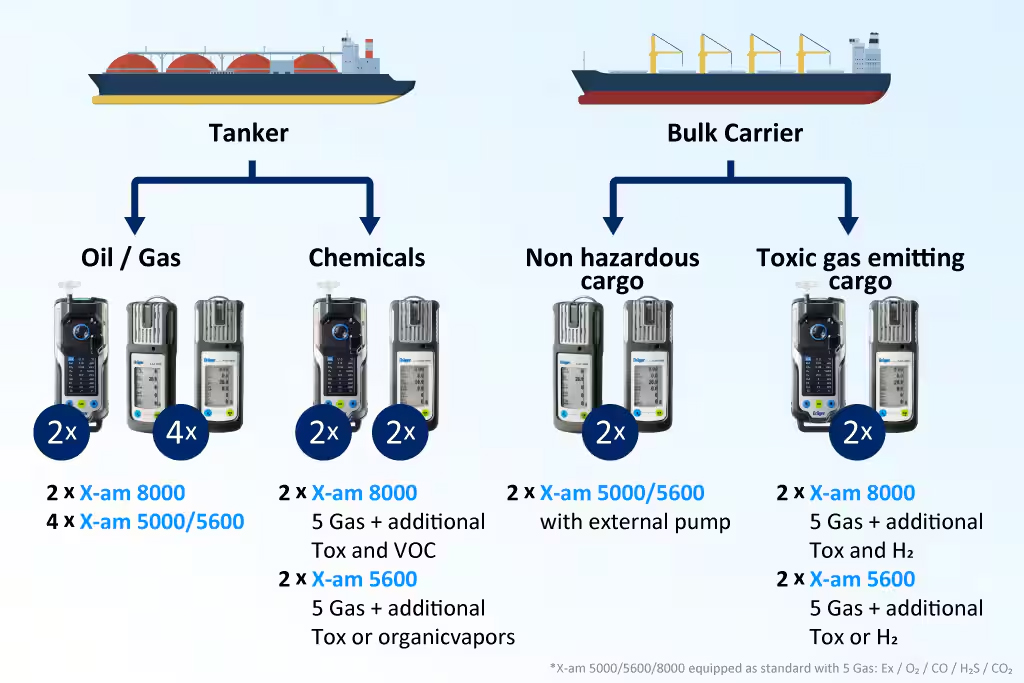
The shift to CO₂ mandates and mandatory enclosed space registers:
Detector solutions for safe confined space entry and cargo hold gas detection on tankers and bulk carriers, in line with MSC.581(110).
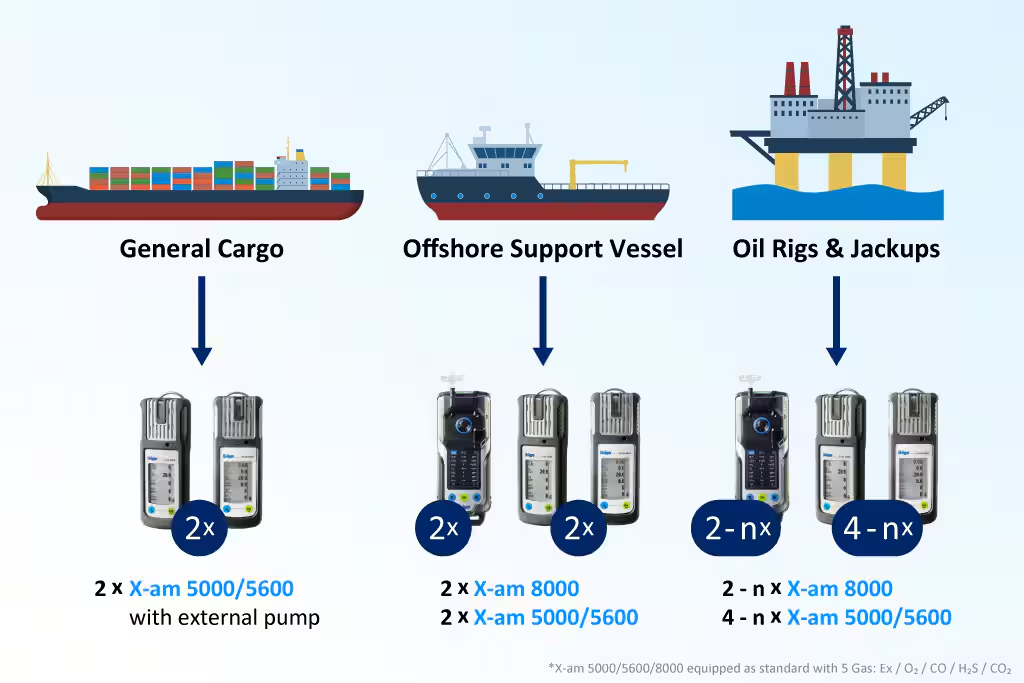
Safe Entry Redefined:
Recommended gas detection setups for general cargo ships, offshore support vessels, and oil rigs & jackups—ensuring compliance with MSC.581(110).
FAQ: Your Questions on MSC.581(110)
MSC.581(110) is the IMO resolution that replaced A.1050(27) on December 3, 2025. It significantly tightens enclosed space entry requirements:
Mandatory space registers
- Expanded scope (including connected spaces and trapped hazardous atmospheres)
- Prohibition of single-person entry
- Stricter entry criteria (e.g., CO₂ < 0.5%)
- Continuous personal monitoring
- Stronger competency and documentation obligations for crew
- Shift from a permit system to a process with ongoing monitoring and documentation
Source: IMO Resolution MSC.581(110), adopted June 2024 |
Official source: IMO.org
Start with a readiness check:
- Capture spaces and hazard profiles.
- Assess device inventory and test/calibration chain.
- Plan training for the "competent person."
- Define CO₂-capable monitoring and clearance measurement.
- Document procedures and structure evidence for inspections and audits.
Source: IMO Resolution MSC.581(110), adopted June 2024 |
Official source: IMO.org
MSC.581(110) explicitly names CO₂ as a primary hazard. You may only enter with stable values (CO₂ < 0.5% / 5,000 ppm). Continuous personal monitoring during occupancy is required. Dräger detection equipment meets these requirements and is approved by major classification societies.
Source: IMO Resolution MSC.581(110), Section 3.2
Dräger CO2 detectors
Per MSC.581(110): At least two sets of portable gas detection equipment.
For high-risk cargoes (coal, wood pellets, metal sulfide concentrates), at least four sets.
Final configuration follows your cargo type, space profile, and SMS risk assessment.
See the infographic for more details.
A CO₂-capable multi-gas detector supports personal monitoring (including O₂, LEL, CO₂, and more). Combined with pump-assisted clearance testing and a defined test/calibration/documentation chain, it creates an end-to-end compliance approach.
Dräger Multi Gas Detectors are specifically designed for these tasks.
Under A.1050(27), CO₂ was not a specific entry parameter. Many fleets relied on 4-gas detectors (O₂/LEL/CO/H₂S) without CO₂ capability. MSC.581(110) introduces CO₂ < 0.5% as a mandatory entry criterion.
Action for your fleet: Verify your detector capability (including CO₂ sensor), calibration status, and procedures for pre-entry clearance plus ongoing personal monitoring.
With MSC.581(110), CO₂ is explicitly recognized as a primary risk in enclosed spaces.
The reason: CO₂ can reach dangerous concentrations without affecting oxygen levels, making it a “silent” hazard. It is now mandatory to measure CO₂ separately and comply with strict thresholds (< 0.5% or 5,000 ppm) before entering any space. This significantly increases crew safety and prevents hidden risks.
Discover all details and practical tips in the full PDF download.
- Compliance Gap Check — We review your current detectors and procedures against MSC.581(110) expectations, with a focus on CO₂ and personal monitoring.
- Right Detection Setup — We support selection and configuration for CO₂-capable multi-gas detection and practical workflows.
- Calibration & Readiness — We set up calibration/service routines and user training aligned with properly calibrated instruments and competent use.
Dräger helps you achieve the MSC.581(110) requirements for your fleet.
Downloads

Navigating IMO Resolution MSC.581(110)
The PDF shows how requirements have changed, explains the concept of “Atmospheric Intelligence,” and demonstrates how to practically implement the new guidelines for registers, monitoring, and documentation.
Download IMO ResolutionWhite Paper

Industry advisory: MSC.581(110)
We summarize MSC.581(110) in a compact way, explain CO₂ monitoring, the register principle, and entry/monitoring criteria — and translate it into a practical roadmap: readiness assessment, device setup, training, calibration, and documentation processes.
Download Overview
Resolution MSC.581(110) - Revised recommendations for entering enclosed sppaces enclosed space abroad ships
MSC.581(110) introduces updated IMO safety recommendations on air monitoring, making personal gas detectors mandatory and requiring structured risk management to reduce the number of fatal accidents when entering confined spaces on board ships.
Read the full report about MSC581(110)Recommended products - Breathing Protection Equipment


Your safety. Our Mission
MSC.581(110) is reshaping safety expectations across the maritime industry.
Dräger is ready with the tools, expertise, and technology to help you stay compliant and protect your people—today and tomorrow.
